Leak Detection in Yorkville, Manhattan
Finding the true source of a water leak in an apartment building requires precision. We locate hidden water problems without opening every wall, helping you resolve disputes and stop property damage fast.
Call (315) 202-8009 for ServiceServing homeowners, co-ops, condos, and property managers in NYC.
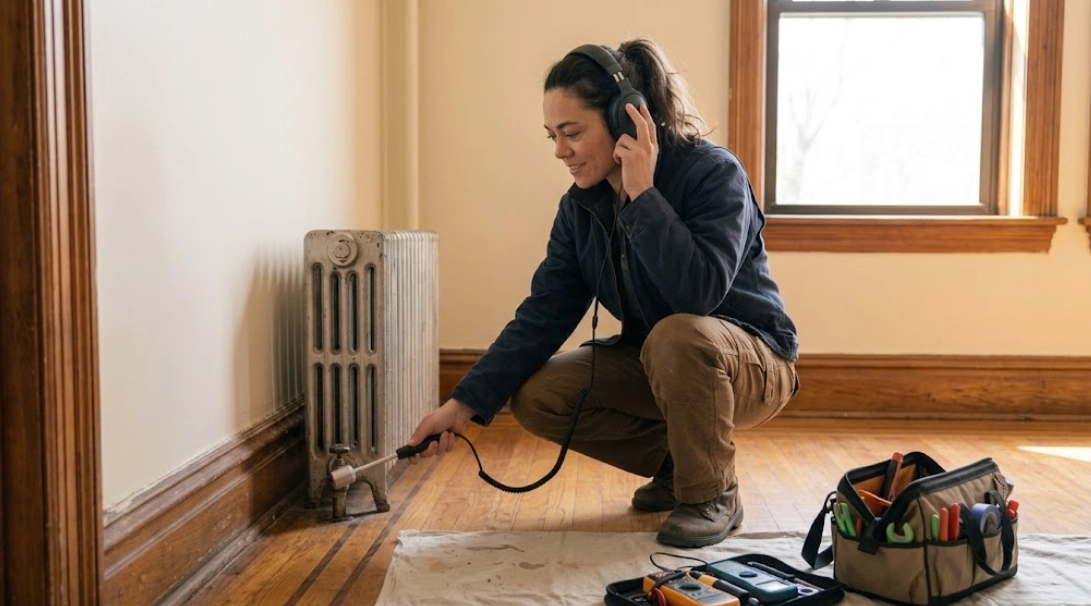
Expert Diagnosis for Hidden Water Issues
In a dense neighborhood like Yorkville, plumbing problems rarely affect just one person. When water appears on a ceiling or begins warping a hardwood floor, the immediate reaction is often panic. The challenge is that water follows the path of least resistance. The spot where it finally breaks through the drywall or plaster is almost never the exact location of the broken pipe. If you need apartment leak detection Yorkville Manhattan residents can trust, you need a professional who understands how water travels along steel beams, concrete slabs, and shared plumbing risers.
Common Warning Signs of a Concealed Leak
Hidden leaks can cause tens of thousands of dollars in damage before they are ever discovered. While a burst pipe is immediately obvious, most leaks start small. You should contact a professional if you observe any of the following warning signs in your co-op, condo, or brownstone:
- Discolored Water Stains: Yellow or brown rings on ceilings or walls that slowly expand over time.
- Peeling Paint or Bubbling Plaster: Moisture compromises the adhesion of paint and plaster, causing it to flake or bubble away from the wall.
- Damp Flooring: Hardwood floors that begin to cup, warp, or feel inexplicably damp near baseboards.
- Unexplained Utility Bills: A sudden, sharp increase in water consumption without a change in household habits.
- Dripping Sounds: Hearing water dripping behind a wall when all fixtures are turned off.
Why Leak Detection is Difficult in Yorkville Buildings
Yorkville features a mix of historic pre-war apartment buildings, mid-century co-ops, and modern condominiums. What these buildings share is complex plumbing infrastructure. Supply lines, drain stacks, and steam heating risers are tightly packed into shared chases between apartments. A hidden water leak detection Yorkville Manhattan assignment often involves distinguishing between a leaking supply pipe under constant pressure, a drain pipe that only leaks when a specific fixture is used, or a heating pipe that only leaks when the boiler is running.
Furthermore, apartment-to-apartment water migration is incredibly common. A ceiling leak repair Yorkville Manhattan property owners require might actually stem from the upstairs neighbor's failing shower pan or a deteriorated wax ring on their toilet. Our diagnostic process is designed to navigate these complex multi-unit scenarios diplomatically and accurately.
The Leak Investigation Process
We approach leak detection methodically. Tearing open walls blindly is destructive, expensive, and often fails to locate the true source of the problem. Instead, we use a systematic process to isolate the issue.
1. Initial Assessment and Visual Inspection
Our technician will first examine the visible damage. We look at the water's color, volume, and consistency. For example, constant, clear water usually points to a pressurized supply line (like a hot or cold water pipe). Intermittent water that appears only at certain times of day suggests a drain line or fixture issue. If the water is warm, it might be related to a heating riser or a hot water line.
2. Non-Invasive Isolation Testing
Next, we isolate different parts of the plumbing system. If we suspect a leak in wall detection Yorkville Manhattan residents are facing is from a shower valve, we might perform a shower pan test or pressurize the supply lines to see if the meter registers a drop. By testing fixtures one by one, we can often rule out the vast majority of the plumbing system without removing a single tile.
3. Navigating Leaks from Upstairs Apartments
If you are experiencing a water leak from upstairs apartment Yorkville Manhattan, coordination is key. With the cooperation of building management and the neighboring tenant, we can conduct dye testing or fixture isolation in the unit above. We understand the delicate nature of neighbor disputes over water damage and provide objective, factual findings that co-op boards and management companies require to authorize repairs.
4. Targeted Access and Repair
Only after we have strong evidence pointing to the source do we recommend opening a wall or ceiling. Our goal is always minimal invasiveness—making a small, targeted access hole to confirm the leak visually and perform the necessary repair. The scope of the repair will depend entirely on what we find: it could be a simple tightened fitting, a pipe leak repair, or in the case of severe corrosion, a recommendation for partial repiping.
Comprehensive Plumbing Services
Locating a leak is only the first step. Our team is equipped to handle the full spectrum of plumbing and heating repairs required to restore your building's integrity.
Pipe Leak Repair
From pinhole leaks in aging copper lines to burst pipes during winter freezes, we provide permanent, code-compliant pipe repairs.
View Service →Repiping
If your galvanized pipes are severely corroded and causing recurring leaks or rust-colored water, we offer targeted and whole-unit repiping.
View Service →Water Heater Repair
Diagnosing and fixing leaks originating from hot water storage tanks, failing relief valves, or related connections.
View Service →Boiler Repair
Addressing leaks from steam heating systems, radiators, and hydronic boiler setups common in older Manhattan buildings.
View Service →Gas Line Repair & Inspection
Safe, professional gas piping repairs, pressure testing, and compliance with NYC Local Law 152 requirements.
View Service →Drain Cleaning
Clearing severe stoppages in kitchen sinks, tubs, and main lines before they back up and cause extensive water damage.
View Service →Backflow Testing
Annual inspection, testing, and repair of backflow prevention assemblies to protect the municipal water supply.
View Service →Local Service for the Upper East Side
Our operations are centered right here on the east side of Manhattan. We provide specialized leak detection near Upper East Side and leak detection near Lenox Hill. Because we focus on this specific geographic area, our technicians are highly familiar with the architectural quirks, pre-war plumbing systems, and strict co-op board alteration agreements that dictate how repair work must be performed. If you manage a building or own an apartment in our core coverage area, check our Service Areas page for more detailed geographic information.
Frequently Asked Questions
How can I tell whether a leak is inside a wall?
The most common indicators are bubbling or peeling paint, a damp or soft spot on the drywall, or a musty odor. You might also hear a faint dripping or hissing sound when the room is quiet, even if no fixtures are currently running.
What should I do if water is coming through my apartment ceiling?
First, move any valuable items or electronics away from the area and place a bucket under the drip. Second, immediately notify your building superintendent or management company so they can attempt to contact the upstairs neighbor. If the leak is severe, building maintenance may need to shut off the water riser serving that line of apartments.
Can a leak be located without opening the entire wall?
Yes, in most cases. By methodically isolating fixtures, testing drain lines, and analyzing the water's behavior, we can usually narrow down the source to a very specific area. While a small access hole is eventually needed to make the physical repair, we aim to avoid tearing down entire walls unnecessarily.
How can a leak from another apartment be investigated?
Investigating an upstairs leak requires access to the unit above. Once inside, we can perform dye tests on their drains (like the shower or toilet) or pressurize their supply lines to see which system is actively failing and allowing water to migrate down into your ceiling.
When should I call for professional leak detection?
You should call a professional the moment you notice a persistent water stain, unexplained dampness, or a sudden drop in water pressure. Water damage compounds rapidly, leading to mold growth and structural rot. The sooner the source is identified and stopped, the less destructive the repair will be.